

Your drawing room is the heart of your home. This is where family gathers, guests feel welcome, and everyday moments happen. The sofa sits right at the center of it all. After designing hundreds of drawing rooms across Dhaka, Chattogram, Sylhet, and other cities, we’ve learned that the best drawing room sofa design in Bangladesh isn’t just about looks — it’s about comfort, proportion, and how the space actually works for your family.
Here’s practical, real-world advice to help you get it right.
Choose the Right Sofa Type for Your Space
Not every sofa works in every home. We always ask clients three questions first: How big is your drawing room? How many people usually sit here? Do you entertain often?
- L-shaped sofas work beautifully in most Bangladeshi apartments. They fit neatly into corners, provide more seating without taking up too much floor space, and create a natural flow.
- Straight 3-seater or 2-seater sofas suit smaller rooms (under 150 sq ft). They keep the space open and easy to walk through.
- Sectional or U-shaped sofas only make sense in larger drawing rooms (250+ sq ft). They feel luxurious but can overcrowd smaller spaces.
Pro tip: Always leave at least 60–75 cm of walking space around the sofa. If you can’t move comfortably, the design fails.
Pick the Right Size — Measure First, Buy Later
One common mistake I see is people choosing oversized sofas that make the room feel cramped. Here’s a simple rule I follow on site:
- Sofa length should be roughly 60–70% of the longest wall it sits against.
- For a 12×14 ft drawing room, a 6–7 ft sofa usually feels balanced.
- In very small rooms, go for a 5 ft loveseat instead of forcing a 3-seater.
Always measure your room and existing furniture before finalizing. We carry a measuring tape to every consultation because guessing leads to regret.
Sofa Color Matching That Actually Works in Bangladesh
Color changes everything. In our climate and with our lighting, some shades look completely different after a few months.
Best performing colors We’ve used successfully:
- Neutral tones (beige, light grey, warm taupe) — timeless and easy to match with curtains, rugs, and walls.
- Soft pastels (sage green, dusty blue) — fresh and modern without feeling too bold.
- Deep colors (navy, emerald, mustard) — great as accent pieces or in larger rooms with good natural light.
Practical color matching tips:
- Match your sofa to the largest fixed element (usually the wall or floor).
- Use the 60-30-10 rule: 60% dominant color (walls/floor), 30% secondary (sofa), 10% accent (cushions, art).
- Test fabric samples in both daylight and evening light — our humidity and tube lights can dramatically shift colors.
Smart Layout & Placement Ideas
Where you place the sofa matters as much as the sofa itself.
- Place the sofa facing the main entrance or the TV — this creates a natural focal point.
- Keep at least one side open so the room doesn’t feel blocked.
- In narrow drawing rooms, float the sofa in the middle with a console table behind it — this works wonders in many Dhaka apartments.
- Pair the sofa with a coffee table that’s two-thirds the length of the sofa. Round tables work better in small spaces; rectangular ones suit longer rooms.
Real Experience from Our Projects
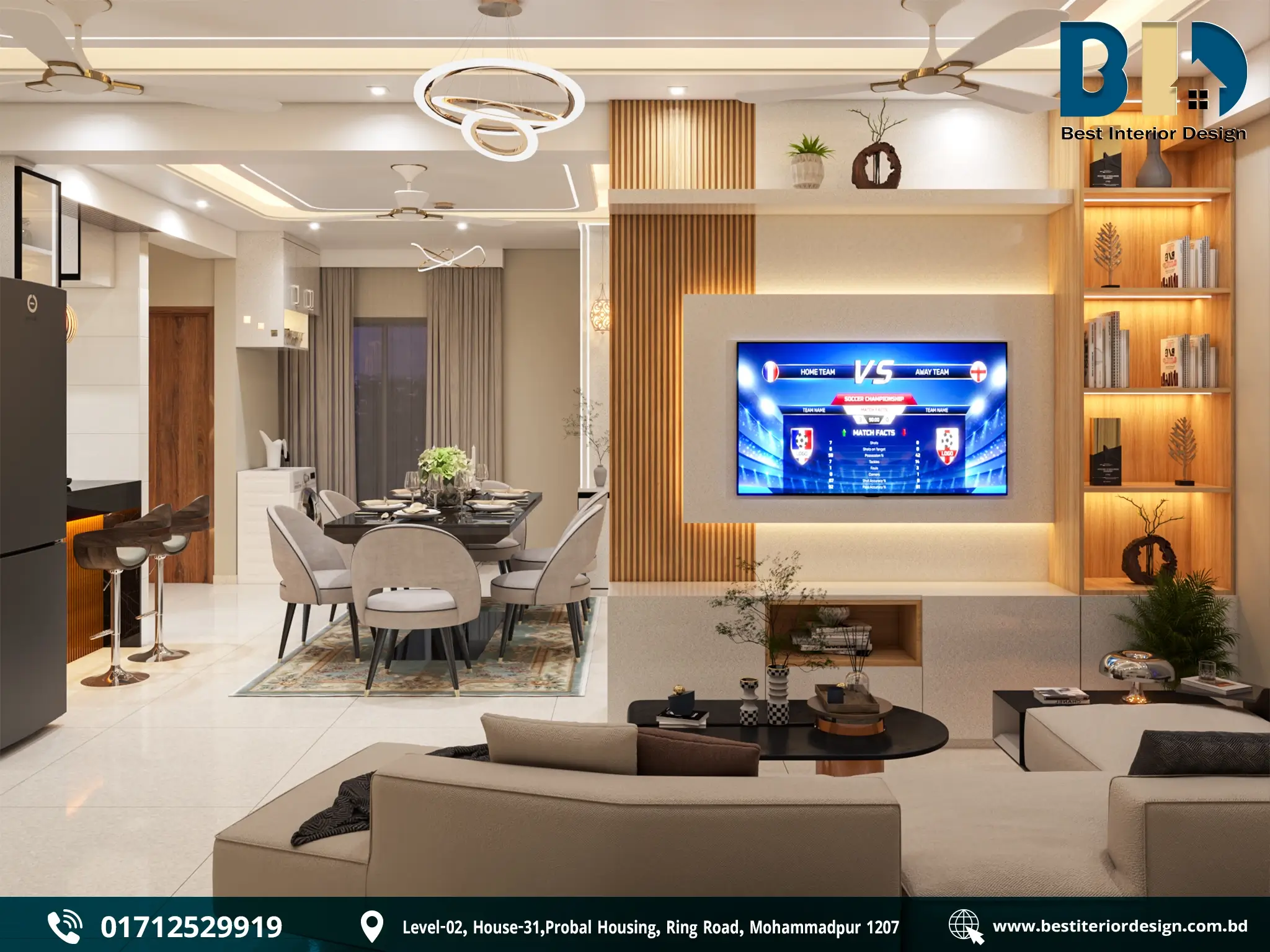
In a recent 1,140 sq ft apartment in Adabor, we used a warm beige fabric sofa with clean, modern lines to create a comfortable living area. Instead of accent chairs, we designed a custom TV feature wall with vertical wooden slats, ambient lighting, and open display shelves, complemented by a sleek black coffee table. The open-plan layout makes the room feel twice as spacious, and the family says it has become their favorite place to relax and spend time together.
In a larger home in Dhanmondi, we went with a deeper grey sectional and layered it with textured cushions. The key was balancing the dark sofa with plenty of natural light and light-colored walls.
Quick Checklist Before You Buy
- Measure your room and note door swings and window placements.
- Decide how many people need to sit comfortably.
- Choose fabric that handles humidity and is easy to clean.
- Test the sofa in person if possible — sit for at least 5 minutes.
- Think about future changes — neutral colors give you more flexibility.
Your drawing room sofa should feel like it belongs there, not like it was forced in. When size, color, and layout work together, the whole space feels calm and inviting.
If you’re planning your drawing room and want help choosing the right sofa design, feel free to contact us. We’re happy to guide you based on your exact room size and lifestyle.
If you want full guidance for drawing room interior design, check our Drawing Room Interior Design in Bangladesh.

One Response